
PVC card basics · 11 min read
Are PVC cards recyclable? Materials & alternatives
Are PVC cards recyclable? The honest answer is "yes, but". This guide unpacks how PVC cards are recycled in practice, which alternative materials are available today (bio-PVC, recycled PVC, PLA, corn-starch, bagasse, ocean plastic) and the real-world trade-offs between sustainability claims, durability and cost.
1. Short answer in one paragraph
Yes, PVC cards are recyclable — but not through household curbside collection. They require specialised plastic recycling channels because PVC contains chlorine, which contaminates standard plastic recycling streams. In practice, the most sustainable choices for a card programme today are: bio-PVC stocks (PVC partially sourced from renewable biomass with full encoding compatibility), recycled PVC stocks (with post-consumer or post-industrial content), biodegradable alternatives based on PLA, corn-starch or bagasse, and a clear focus on card longevity — a card that lasts five years on a single production run has a smaller cumulative footprint than one replaced every six months. The trade-offs are real on every route; this guide unpacks them.
2. What PVC is, and what that means for recycling
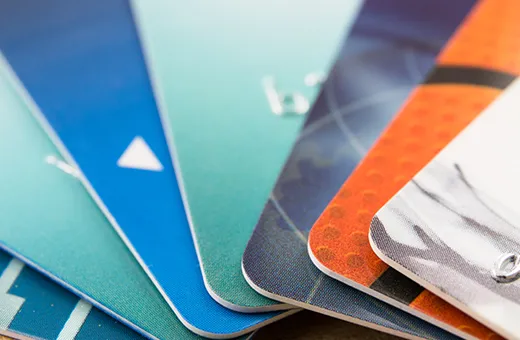
PVC (polyvinyl chloride) is one of the world's most widely produced plastics — used in everything from window frames and pipes to flooring, medical tubing and credit cards. As a material, it has several properties that explain why it dominates custom card printing: excellent printability, dimensional stability, durability under daily handling, compatibility with multi-layer lamination, and the ability to embed antennas and chips.
The chlorine atoms in the polymer chain are also what makes PVC harder to recycle than polyethylene (PE) or polyethylene terephthalate (PET). Mixing PVC into a PE or PET recycling stream contaminates the output — the recycled pellets become unusable for high-quality applications, and worse, the chlorine can produce harmful by-products when the contaminated stream is heated for reprocessing. That is the central reason why PVC items, including PVC cards, must be sorted into a separate recycling channel rather than thrown into household plastic bins.
3. Why standard PVC cards do not belong in household bins
Across most European municipalities, household plastic bins are designed to collect plastic packaging — bottles, containers, films — which are typically PET or PE. PVC items, although technically plastic, are not part of the accepted stream. A PVC card thrown in the household plastic bin will either be sorted out manually at the recycling facility (best case) or contaminate the batch (worst case).
The practical implications for card programmes:
- End-of-life cards from customers — most cards thrown away by customers end up in general waste, not in any recycling stream. This is the dominant scenario today and it is largely outside the issuer's control.
- End-of-life cards from internal programmes — employee badge replacements, expired loyalty programmes, recalled stock — these can be collected centrally and sent to specialist PVC recycling channels.
- Pre-consumer waste — production offcuts and unused stock from the printer are routinely recycled through closed-loop industrial channels.
4. Specialist PVC recycling channels
Specialised industrial PVC recycling does exist and has matured significantly over the past decade. The European VinylPlus initiative, for example, has built a network of recycling streams across the EU that processes hundreds of thousands of tonnes of post-consumer and post-industrial PVC each year.
For a card programme, three practical routes are typically available:
- Closed-loop with the supplier — end-of-life cards are collected by the issuer (the bank, the hotel chain, the corporate IT department) and returned to the card supplier, who feeds them back into industrial PVC recycling. This works well for high-value programmes with a clear collection mechanism.
- Local plastic specialist collection — drop-off points operated by municipal recycling centres or specialist private operators accept PVC items. Coverage varies significantly by country and region.
- Industrial waste contracts — organisations with structured industrial waste contracts can request a dedicated PVC stream to be added. Common for large enterprises and public institutions.
The economics are not trivial — collecting and transporting end-of-life cards costs more than producing virgin material in most cases. The sustainability gain is real, but the cost premium has to be accepted as part of the programme design.
5. Recycled and chlorine-reduced PVC stocks
One of the most practical levers for reducing the environmental footprint of a card programme is to specify recycled PVC at the production stage rather than virgin PVC. Modern recycled PVC stocks are available with:
- Post-industrial recycled content (PIR) — typically 30 to 50% recycled content sourced from production offcuts and unused stock. The most widely available recycled PVC route today.
- Post-consumer recycled content (PCR) — recycled content sourced from end-of-life consumer products. Less widely available for card production but increasingly accessible for high-volume programmes.
- Chlorine-reduced compositions — formulations that reduce the chlorine content of the final card body, making the material easier to integrate into standard plastic recycling streams.
Recycled PVC stocks print as well as virgin PVC and accept the same encoding and finishing options. The aesthetic and durability differences are minor to imperceptible. The cost premium typically ranges from a few percent on high-volume programmes to a more significant uplift on small runs.
6. Bio-PVC — bio-sourced PVC stocks
Bio-PVC sits between standard PVC and full alternatives like PLA or bagasse. The polymer chemistry is the same as traditional PVC — same printability, same durability, same compatibility with magnetic stripes, RFID/NFC antennas and chips — but a portion of the raw material is sourced from renewable biomass (typically sugarcane-derived bio-ethanol) instead of fossil hydrocarbons. The carbon footprint at production is significantly reduced; the in-wallet experience is indistinguishable from standard PVC.
This makes bio-PVC the practical sustainability choice for card programmes that need everything PVC offers but want to reduce upstream emissions:
- Drop-in printability and durability — bio-PVC accepts the same CMYK printing, the same gloss/matte/spot UV/hot foil finishes and the same wallet-grade lifecycle as standard PVC.
- Full encoding compatibility — magnetic stripe (HiCo / LoCo), RFID/NFC chips (Mifare DESFire, NTAG, EM Marin), contact chips and dual interface all work on bio-PVC exactly as on standard PVC. This is the critical advantage over PLA, bagasse or paper for encoded cards.
- Bio-sourced content percentage — typical formulations carry 30 to 50% bio-sourced content. Higher percentages exist but are less widely available for card production today.
- Honest limitations — bio-PVC is still PVC in chemical structure: it is not biodegradable, and it still requires specialist PVC recycling channels at end-of-life. The sustainability gain is on the production side (carbon footprint, fossil resource depletion), not on end-of-life disposal.
For programmes that rely on encoded cards (loyalty programmes scanned at the till, access badges, smart card members, contactless gift cards), bio-PVC is often the best balance between sustainability commitment and operational reliability. Combining bio-PVC with recycled content (post-industrial or post-consumer) compounds the upstream gains. See our PVC cards range for the full substrate options and the smart cards page for encoding-led programmes.
7. Biodegradable card alternatives
Biodegradable card substrates have matured significantly in recent years. The most commonly used materials in professional card production are:
7.1 PLA (polylactic acid)
A bioplastic derived from fermented plant starch (typically corn). PLA cards look and feel similar to traditional PVC cards but biodegrade under industrial composting conditions (high temperature, controlled humidity). PLA does not biodegrade in a backyard compost or in nature — that is an important nuance often missed in marketing material.
7.2 corn-starch composites
Corn-starch-based substrates blend renewable biopolymers with stabilisers to produce a card that combines reasonable durability with a clearer end-of-life story than PVC. The visual rendering is slightly different from standard PVC (slightly more matte, less rigid feel).
7.3 bagasse and other plant fibre cards
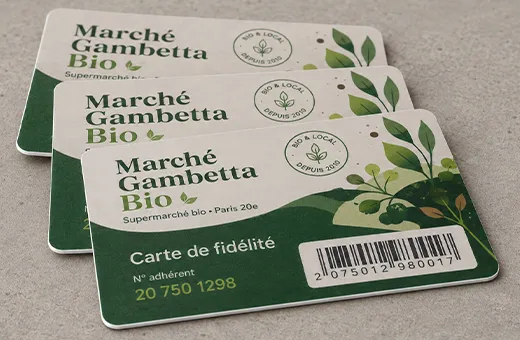
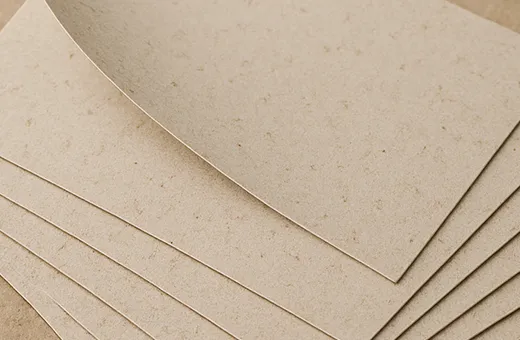
Cards based on sugarcane bagasse (a by-product of sugar production), wheat straw or recycled paper composites sit between paper cards and bioplastic cards. They are typically thinner and less rigid than 0.76 mm PVC and best suited for short-to-mid-lifespan programmes (single season, single event, single campaign).
Across all biodegradable alternatives, three caveats apply: (1) the end-of-life advantage requires actual access to industrial composting (which is not universal); (2) the durability is generally below standard PVC, so the replacement frequency may be higher; (3) the unit cost remains above standard PVC, with the gap narrowing each year.
8. Ocean-plastic and post-consumer recycled cards
A more recent category of card stocks uses ocean-bound plastic (OBP) or other post-consumer recycled content as a marketing-led, narrative-driven alternative. These materials carry a strong story for sustainability-focused brands — they convert plastic that would otherwise end up in waterways into a usable card stock. Several certification schemes (OceanCycle, Prevented Ocean Plastic) now back claims with supply-chain traceability.
From a production standpoint, ocean-plastic cards behave similarly to recycled PVC: they print well, accept standard encoding and take standard finishes (gloss, matte, hot foil, spot UV). The story behind the material is often what justifies the investment for brands targeting environmentally conscious customers.
9. Paper cards as an eco-friendlier route
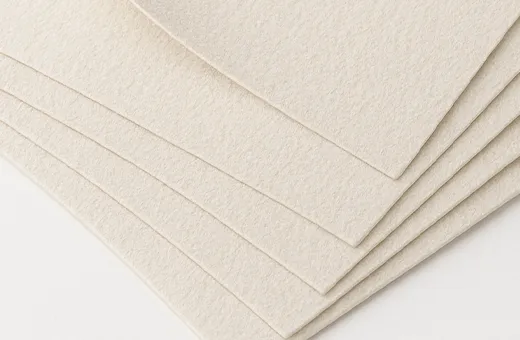
The most accessible eco-friendlier alternative to PVC remains a well-designed paper card programme. Paper cards on recycled or FSC-certified stock enter standard paper recycling streams without contaminating them, and biodegrade naturally in most environments.
The trade-offs are equally important to understand:
- Paper cards typically last weeks to a few months in a wallet, not years. For programmes intended to last more than one season, the replacement frequency can offset the sustainability gain.
- Paper cannot host magnetic stripe, NFC or RFID encoding. For card programmes that need reader interaction, PVC remains the right material.
- Paper cards print beautifully but the perceived value is lower than premium PVC. For VIP, executive or premium positioning, the brand impact is different.
Our dedicated article on PVC vs paper cards walks through the full side-by-side comparison, including durability, encoding, finishes and cost per usage.
10. The "cost per usage" angle on sustainability
The most overlooked factor in card sustainability discussions is card longevity. The environmental footprint of a card is not just the material it is made of — it is the material multiplied by the replacement frequency over the life of the programme.
Example: 500-customer loyalty programme over 3 years
Option A: 500 standard PVC cards used continuously for 3 years → 1 production run, 1 shipping cycle, 1 batch of cards in circulation.
Option B: 500 paper cards replaced every quarter → 12 production runs, 12 shipping cycles, 12 batches of cards manufactured and disposed of.
In real cases, the cumulative material consumption, the transport emissions and the disposal volume of Option B frequently exceed those of Option A — despite paper being individually more recyclable than PVC. The "right" sustainability answer depends on the actual replacement frequency, not just the substrate.
This is why card durability — historically a quality and brand-perception argument — has become one of the strongest sustainability arguments too. A wallet-grade PVC card that survives 5 years has a smaller cumulative footprint than a paper card replaced 10 times over the same period.
11. Communicating sustainability claims responsibly
Card sustainability marketing has accelerated faster than the underlying materials science. Several claims that look credible at first glance do not hold up under scrutiny:
- "100% biodegradable" without conditions — most bioplastic cards only biodegrade in industrial composting, not in nature or a home compost. The condition matters.
- "Recyclable" without a channel — saying a card is recyclable is technically correct for almost any plastic, but if there is no practical recycling channel for end-users, the claim is misleading.
- "Recycled content" without a percentage — a card with 5% recycled content and a card with 50% recycled content are not comparable. Always look for the percentage and the source (PIR vs PCR).
- "Carbon neutral" without methodology — carbon neutrality claims require a verifiable methodology and ideally third-party certification. Otherwise the claim is hollow.
In the EU, the upcoming Green Claims Directive will impose stricter requirements on environmental marketing claims — a good reason to align your card sustainability narrative with verifiable facts rather than aspirational language. Conservative, factual claims build longer-term brand credibility than overstated promises.
12. Frequently asked questions
Can i throw an old PVC card in my household plastic recycling bin?
In most European municipalities, no. Household plastic bins typically accept PET and PE packaging — not PVC items. The PVC card would be sorted out manually at the facility, or worse, contaminate the recycling batch. The correct route is specialist plastic collection or, where available, a closed-loop return to the card issuer or supplier.
Are biodegradable cards the same as PVC cards visually?
Biodegradable cards (PLA, corn-starch, bagasse) are visually similar to PVC but not identical. PLA cards come closest to PVC in look and feel. Corn-starch composites are slightly more matte. Bagasse and plant fibre cards are visibly different — more textured, slightly thinner and less rigid. The right choice depends on the brand positioning and the intended lifespan.
Do biodegradable cards work with magnetic stripes, NFC or chips?
PLA cards can carry magnetic stripes, NFC antennas and chips with the same reliability as PVC. Corn-starch and bagasse cards are more limited — they are usually specified for short-lived programmes that do not require reader interaction. For encoded card programmes that need to last more than one season, recycled PVC, bio-PVC or chlorine-reduced PVC remain the practical choices.
What is bio-PVC and how does it compare to PLA?
Bio-PVC is PVC where a portion of the raw material comes from renewable biomass (typically sugarcane bio-ethanol) instead of fossil sources. Chemically and functionally, it behaves like standard PVC — same printability, same durability, full encoding compatibility (magnetic stripe, NFC, chip). PLA, by contrast, is a different polymer (polylactic acid) that is biodegradable in industrial composting but less durable and more limited for encoded cards. For long-lived encoded card programmes, bio-PVC offers a sustainability upgrade without trading away reliability; for short-lived encoding-free cards, PLA carries a stronger end-of-life story.
Is recycled PVC more expensive than virgin PVC?
Yes, typically. The unit cost premium ranges from a few percent on high-volume programmes to a more significant uplift on small runs. The premium has been narrowing each year as the recycled PVC supply chain matures. For most card programmes, the premium is comparable to choosing a slightly more premium finish — a meaningful but absorbable cost difference.
Can your team produce cards with recycled or biodegradable materials?
Yes. Recycled PVC stocks, PLA, corn-starch substrates, bagasse and recycled paperboard are all available routes. We discuss the right material with you based on your sustainability goals, the encoding requirements, the expected lifespan and the budget. Mention your sustainability priorities in the quote request and we propose the right specification combination.
Are PVC cards more harmful than other plastics?
PVC is not inherently more harmful than other plastics in its solid, finished form — a PVC card in a wallet poses no health risk. The environmental concerns are linked to manufacturing (chlorine production), incineration (potential dioxin release at sub-optimal incineration temperatures) and recycling (contamination of other plastic streams). Modern PVC production has significantly reduced these impacts compared to historical processes.
What is the most sustainable card option overall?
There is no universal answer — the right material depends on the lifespan, encoding requirements, perceived value and replacement frequency. For long-lived programmes with reader interaction, recycled PVC is often the best balance. For short-lived programmes without encoding, recycled paper is hard to beat. For brands prioritising sustainability storytelling, ocean-plastic or PLA stocks add a credible narrative on top of the material itself.
How can i verify sustainability claims from a card supplier?
Ask for the specific percentage of recycled content, the source (PIR vs PCR), the certification scheme (if any), and the recycling channel available at end-of-life. Suppliers with credible sustainability programmes can answer all four questions clearly. Vague answers or unconditional claims ("eco-friendly", "100% recyclable") without a verifiable methodology are warning signs.
13. Next steps
Sustainability in custom card production is a real conversation worth having, but the right answer depends on your specific programme — lifespan, encoding, volume, replacement frequency, brand positioning. We are happy to discuss the trade-offs and recommend a material combination that aligns with your sustainability priorities without compromising on durability or encoding reliability.
Share your brief — and your sustainability goals — through our quote form, and we will reply with an itemised quotation and the right material recommendation, typically within one business day.
Related articles
Talk to a custom card specialist
Building a more sustainable card programme?
Share your sustainability goals alongside your brief — bio-PVC, recycled PVC, PLA, biodegradable, paper, or a coordinated mix — and we will return a clear quotation with the material trade-offs explained upfront.