
Stocks for every positioning
Coated 350 and 400 gsm for the workhorse standard, uncoated natural for design-led brands, FSC recycled for eco positioning, triplex multi-layer for visible edges, cotton for ultra-soft tactile premium.
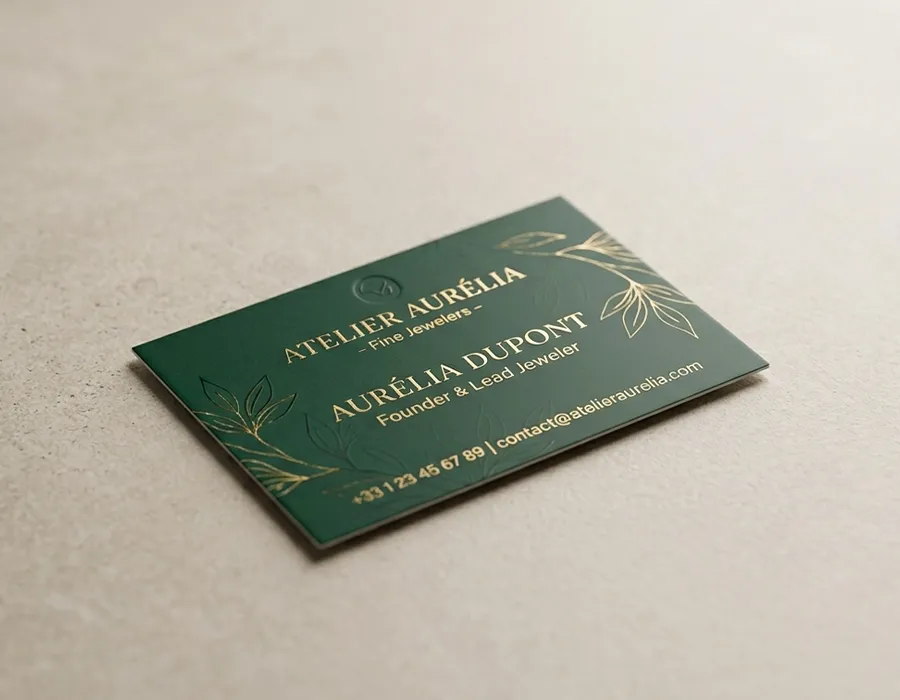
Coated, uncoated and triplex stocks with foil stamping and edge painting
Custom paper business cards for brands, agencies and independents who want a refined printed introduction. From 350 gsm coated stocks to triplex with painted edges — printed and finished across Europe.
Why Lumacards for paper business cards
Coated 350 and 400 gsm for the workhorse standard, uncoated natural for design-led brands, FSC recycled for eco positioning, triplex multi-layer for visible edges, cotton for ultra-soft tactile premium.
Hot foil stamping, edge painting on triplex, embossing in raised relief, spot UV and soft-touch lamination — the finish combinations that distinguish a real paper card from a generic on-demand business card.
FSC-certified recycled and uncoated stocks, vegetable inks compatible with most stock grades — a paper card range aligned with sustainability reporting and Green Claims compliance for European brands.
How it works
A workflow tuned for paper — where the stock, the ink coverage and the finish layering decide whether the card looks ordinary or kept.

Send your print-ready file with stock and finish preferences — or brief us on the brand and our designers compose the business card layout.

A digital proof is sent showing the artwork rendered on the chosen stock, with finish zones (foil, spot UV, embossing, edge colour) clearly mapped. Production starts only after your sign-off.
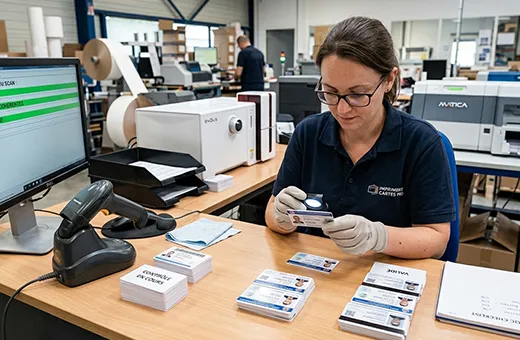
Printing on the chosen stock, finishing applied in sequence (lamination first, then foil, then edge painting if applicable). Each card is inspected for ink coverage, finish registration and edge cleanliness.
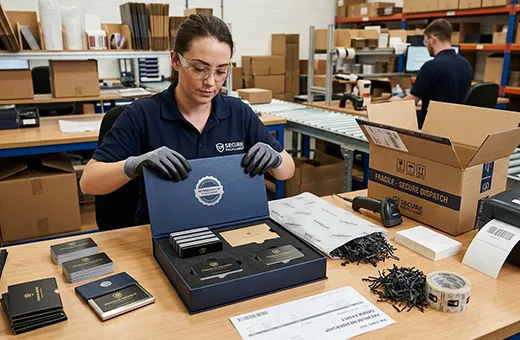
Cards packed flat in protective presentation boxes — moisture, bending and edge wear all controlled in transit. Tracked dispatch across Europe and the UK; international on request.
Free quote — no commitment
Share your brand and project brief and we return a tailored quotation within 24 hours. From 100 cards minimum, free digital proof on the chosen stock, no hidden costs.
Get your quote in 24h
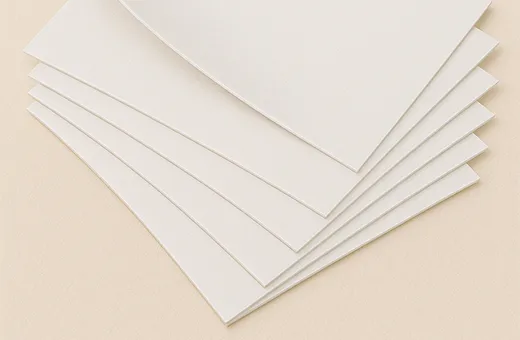
The reference paper business card stock across European print workshops. Smooth coated surface, sharp colour rendering, balanced rigidity — the right base when the design does the brand work without a statement stock.
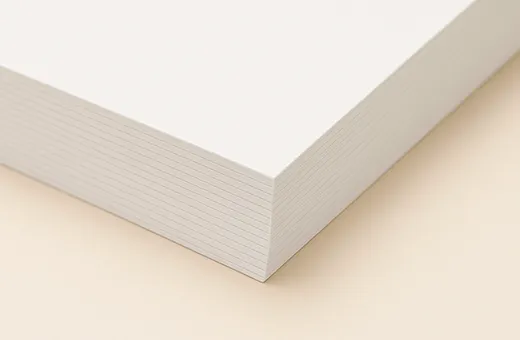
Heavier coated stock with a more substantial feel in the hand. Recommended when the standard 350 gsm reads as too light for the brand positioning, especially for executive and consulting use.
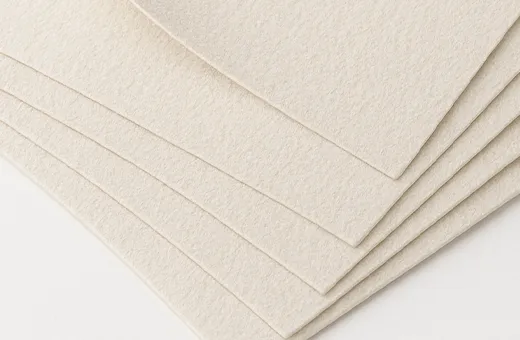
Matte uncoated stock with a soft, unfiltered texture. Often chosen by design studios, architects, photographers and independent brands looking for a card that feels considered rather than mass-printed.
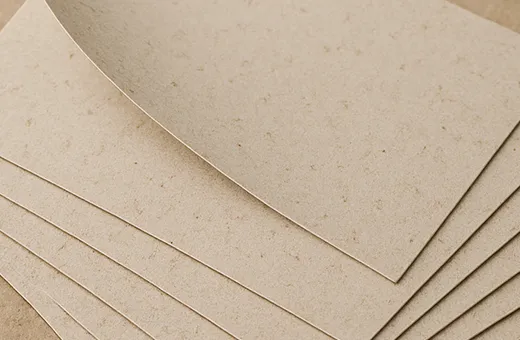
FSC-certified recycled fibre paper for brands running on a visible sustainability positioning. Pairs well with uncoated finish and minimalist typography for a credible eco statement on the card itself.
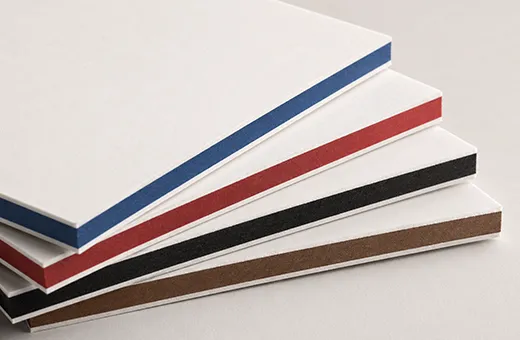
Three layers of paper bonded together — typically 600 to 800 gsm total. Allows edge painting in a coloured central layer and creates the substantial, almost rigid feel associated with high-end studio cards.
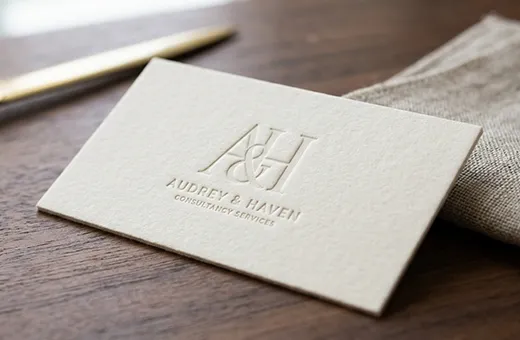
Paper made from cotton fibres rather than wood pulp — distinctly soft, slightly thicker visually than its weight suggests, and naturally suited to embossing or blind embossing for an understated tactile result. A signature stock for high-end consultancies and boutique services.

Translucent vellum stock with a frosted, semi-transparent appearance — light passes through the card and reveals layered design elements in a way no opaque stock can match. The signature choice for architects, interior designers, photographers and creative studios where the card itself becomes part of the design statement.
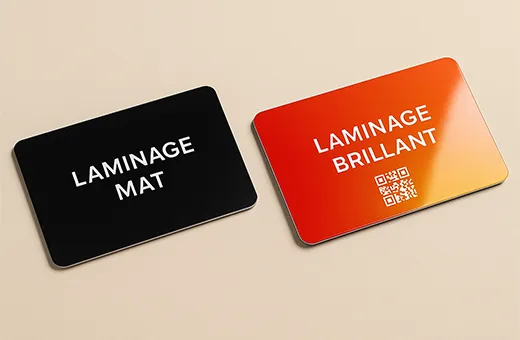
Protective film applied across the printed surface. Gloss intensifies colour saturation and reads as vibrant, particularly on dark backgrounds; matte tones the rendering down for a quieter, more refined first impression. Both finishes extend card lifespan and shield the print from fingerprints, scuffs and edge wear during everyday handling.
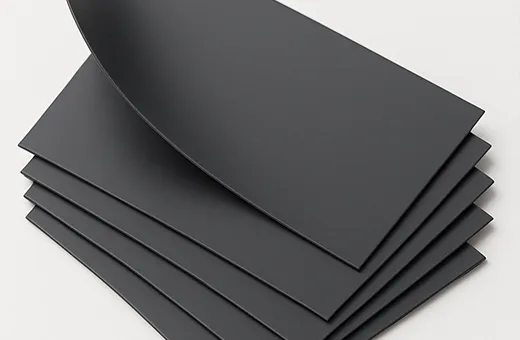
Velvety matte film over the printed surface — fingerprint-resistant and signature of premium consultancy, beauty and hospitality cards. Particularly striking on dark backgrounds.

Glossy varnish applied only to specific design elements over a matte or soft-touch background. Creates a refined visual contrast on logos, names or key motifs without the metallic statement of foil.
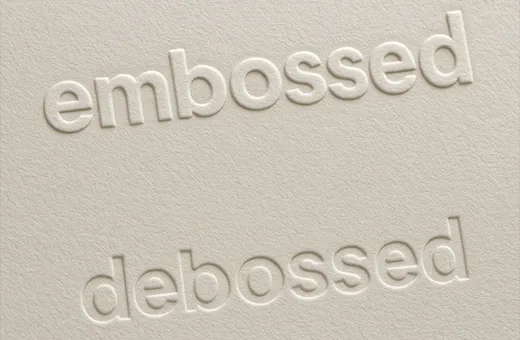
Raised (emboss) or recessed (deboss) relief on logo, monogram or graphic elements. Applied without ink for a blind tone-on-tone effect, or combined with print and foil for layered finishes.
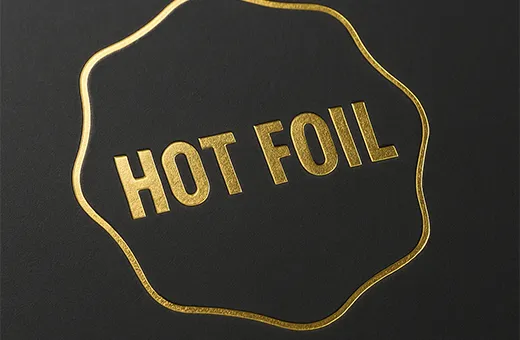
Gold, silver, copper, rose-gold or coloured metallic foil applied with heat and pressure. Highest visual impact when applied on dark backgrounds, uncoated stocks or laminated soft-touch surfaces — the defining finish for premium paper card positioning.
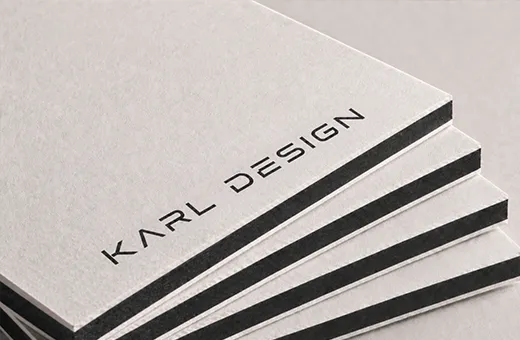
Coloured ink applied to the cut edge of triplex or thick stock cards. Available in any brand colour or metallic gold. Visible only when the stack is held closed — a subtle but immediately recognised premium signal.
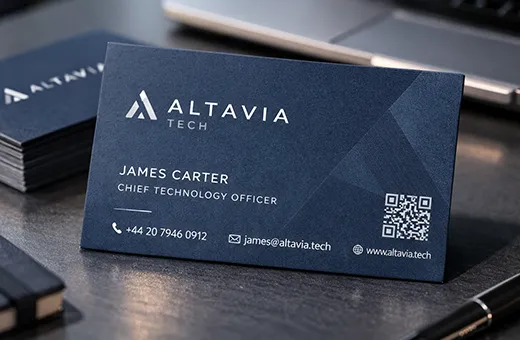
The reference paper business card format on the European market, fitting wallet card slots and standard cardholders. Recommended for all daily-use, networking and multi-recipient distribution.
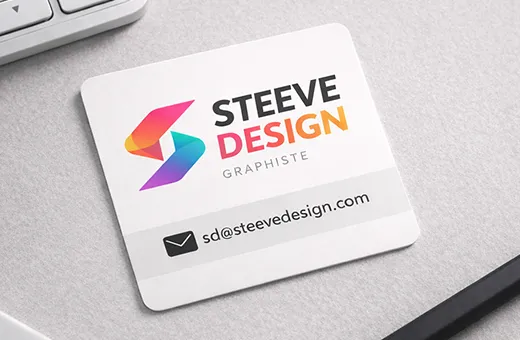
Compact square card for design studios, photographers and creative professionals seeking a format that immediately stands out. Compatible with most cardholders, slightly less wallet-friendly than the standard format.

Die-cut radius on the four corners — softens the silhouette, reduces bend wear at the corners and adds a finished, considered look to the card edge.
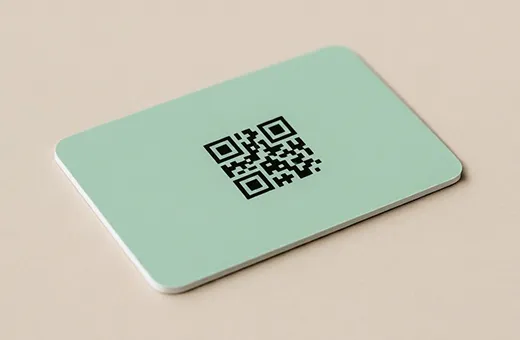
Unique QR per card linking to a vCard, a LinkedIn profile, a portfolio or a personal landing page — a discreet way to bridge the printed card with the recipient's digital presence.
Frequently asked questions
Practical answers on stocks, finishes, formats and production — for professionals preparing a paper business card project.
Paper remains the dominant business card format across European markets and the natural choice for the majority of professional uses. It supports a much wider range of stocks (coated, uncoated, recycled, triplex, cotton) and exclusive finishes (edge painting, blind embossing, hot foil on uncoated stock) that PVC cannot deliver. It is also the right answer when sustainability positioning matters, when the brand identity is design-led rather than tech-driven, or when the budget per card needs to stay below the threshold where plastic becomes worthwhile. PVC business cards are more relevant when long-term durability or a transparent stock are part of the positioning.
Triplex is three sheets of paper laminated together to form a single thicker board, typically 600 to 800 gsm in total. The lamination process makes two things possible. First, the card has a substantial, almost rigid feel that immediately separates it from standard 350 gsm cards. Second, the central layer can be a different colour from the outer two — visible on the cut edge — which is the foundation of edge painting. Triplex is the reference choice for design studios, architects and consultancies positioning a premium card without going to plastic.
Edge painting is the application of coloured ink to the cut edge of a thick card after die-cutting. It requires a stock thick enough for the painted edge to be visually significant — in practice, triplex or quadplex multi-layer papers above 600 gsm. Available in any brand colour as well as metallic gold and silver. Edge painting is invisible until two cards are stacked or the card is held edge-on, which makes it a discreet but immediately recognised premium signal. Standard 350 or 400 gsm stocks are too thin to carry visible edge colour.
Coated 350 gsm remains the dominant stock across European print workshops — the right balance of cost, rigidity, print quality and shelf-availability. For brands looking to step up without changing format, coated 400 gsm or uncoated natural in the same weight are the most common upgrades. For premium positioning, triplex with edge painting or cotton paper with embossing are the two reference signatures. Recycled FSC stock is the standard choice when a sustainability positioning needs to be visible on the card itself.
Yes. Variable data printing is the most efficient way to equip a team, agency or consultancy: provide a structured spreadsheet (CSV or Excel) with one row per person — name, title, email, phone — and we merge the variable fields onto the standard brand template. Cards are produced in a single run, then sorted and packaged by individual recipient before dispatch. The 100-card minimum applies to the total print run, not per individual, so a team of 20 with 50 cards each meets the threshold comfortably.
Our standard minimum is 100 cards per design — the threshold below which the per-card cost rises sharply because press setup, finish setup and quality control time become disproportionate to the run length. For variable data team projects, the minimum applies to the total print run, not per recipient. For very small runs of one-off premium cards (embossed monograms on cotton stock for example), specific small-batch options can sometimes be arranged on request.
Yes. FSC-certified recycled paper is offered as a standard stock option, alongside uncoated natural stock from responsibly managed forests. Vegetable inks (soy or linseed-based) are compatible with most paper grades and pair particularly well with uncoated and recycled stocks. For brands subject to sustainability reporting or the EU Green Claims Directive, composition details and stock certifications can be provided on request to support tender responses or environmental disclosures.
Yes. A unique QR per card can be printed alongside the standard contact details, linking to a vCard download (which adds the contact directly to the recipient's phone), a LinkedIn profile, a personal landing page, a portfolio or any other URL. This is increasingly the standard way to bridge a printed business card with the recipient's digital workflow, particularly in tech, consulting and creative industries.
Standard production runs 4 to 6 working days from proof approval — slightly faster than PVC because no lamination on plastic or chip encoding is involved. For projects with edge painting, embossing or triplex stock, lead time can extend to 8 to 10 working days because of the additional finishing steps. Shorter lead times may be possible depending on the configuration and the production schedule — mention your deadline in the quote request. Delivery covers Europe and the UK with tracked shipping; international dispatch is arranged on request.
Yes — every paper business card order includes a free digital proof showing the artwork rendered on the chosen stock with finish zones (foil, spot UV, embossing, edge colour) clearly identified. For variable data team projects, a sample card is also generated with a representative recipient's data so you can validate the merge before the full run starts. No cards are produced without your explicit sign-off.
Yes. Two design routes alongside print-ready file orders. Template adaptation — share your brand guidelines, contact format and finish preferences (foil placement, embossing zones, edge painting colour), and we adapt a paper business card template to your brand. Full custom design — our in-house designers create the business card from scratch including stock-specific layout considerations, finish placement and team variable data structure. Both routes are quoted alongside the print order, with two revision rounds included.
Who orders paper business cards
Paper remains the dominant business card format in Europe — and for several professions, it carries signals that plastic cannot replace.
Architects, graphic designers, photographers, branding studios and art directors — professions where the card itself is read as a design statement. Triplex with edge painting and embossed monograms on cotton stock are the most-requested combinations.
Strategy consultants, communications advisors, lawyers, accountants and freelance experts. Soft-touch lamination on coated 400 gsm and minimalist debossed branding on uncoated stock are the references for this audience.
Restaurants, boutique hotels, wine bars, concept stores and independent retailers — businesses where the brand identity sits in textile, paper and material choices, and the card is a coherent extension of the in-store experience.
B Corp certified businesses, sustainability-focused agencies, organic and ethical brands, and public-sector teams subject to environmental reporting. Recycled FSC stock with vegetable inks is the standard configuration for this audience.
Custom paper business card printing
A paper business card is still the default introduction in European professional life — handed over at meetings, slipped into conference badges, exchanged in showrooms, dropped at counters. The paper itself is the first signal: coated 350 gsm reads as professional and standard, coated 400 gsm reads as serious, uncoated natural reads as considered and design-led, recycled FSC reads as eco-aware, triplex with painted edges reads as an unambiguous premium statement, and cotton paper paired with embossed branding reads as craft-led luxury. Lumacards produces paper business cards across all six stock families at the standard European format (85 × 55 mm), with square and reduced formats also available for distinctive positioning. Every order comes with a free digital proof on the chosen stock and a 100-card minimum per design.
Finishing is what separates a printed card from a kept card. Hot foil stamping in gold, silver, copper or rose-gold delivers the strongest visual impact, particularly on dark backgrounds and soft-touch laminated surfaces. Edge painting on triplex stock adds a signature colour that is invisible until the card is held edge-on — the discreet but immediately recognised premium signal. Embossing and debossing add a tactile relief that is felt before it is seen, while spot UV varnish and soft-touch lamination layer onto these techniques to build the finish combinations that make a paper card recognised as a real, considered piece of brand collateral. For professionals also ordering plastic cards or paper card programmes, Lumacards produces the full companion range under the same brand project — PVC business cards for long-term durability, barcode loyalty cards, stamp loyalty cards and paper gift cards for retail and hospitality use cases.
Get a tailored quote within 24 hours — from 100 cards, premium stocks and finishes available, free digital proof included.