
Contact & contactless
ISO 7816 contact chips and ISO 14443 contactless RFID on one card or combined — Mifare Classic, Plus, DESFire, NTAG, EM Marin and Java Card.
Contact ISO 7816 · contactless Mifare, DESFire, NTAG, EM
Professional smart cards with contact or contactless chip for access control, secure authentication, employee badges, transport and ticketing. Every major standard supported — from Mifare Classic to DESFire EV3 and Java Card applet programming.
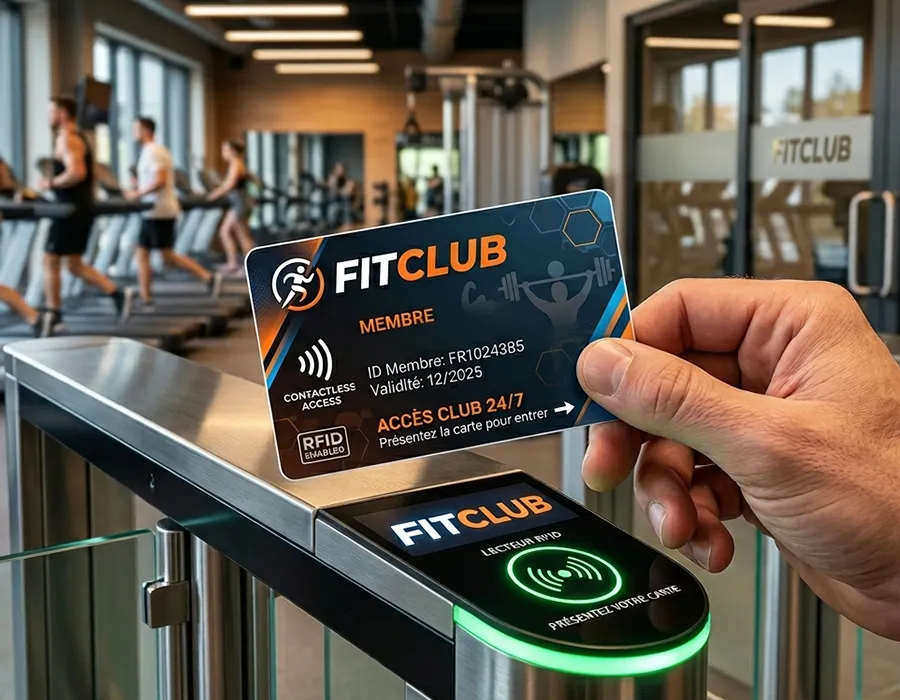
Why Lumacards for smart cards
ISO 7816 contact chips and ISO 14443 contactless RFID on one card or combined — Mifare Classic, Plus, DESFire, NTAG, EM Marin and Java Card.
Chip initialisation, sector keys, UID programming, Java Card applet loading and PKI certificate injection performed under controlled workflow.
Every card is tested on reference equipment for the target standard. No batch ships before read-validation is confirmed end-to-end.
How it works
Smart card projects depend on precise reader compatibility. A rigorous specification phase avoids expensive reissue scenarios downstream. Public bodies rolling out RFID or NFC access across several sites can see how we work with their procurement rules in the section on cards for councils and public bodies.

Send your print-ready file with chip standard and personalisation needs — or brief us on the programme and our designers create the card.

A digital proof is sent by email for written approval before any production starts. Layout, chip standard, personalisation parameters and encoding specs are locked upfront — production cannot launch without your sign-off.
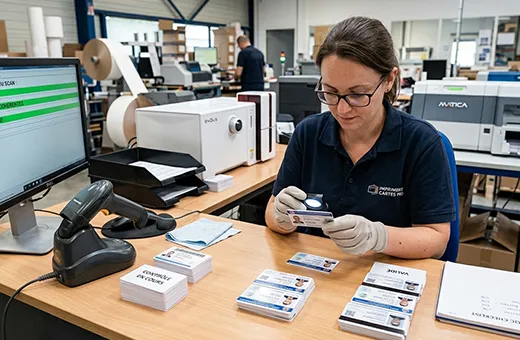
Cards are printed, chips are initialised with the agreed parameters (sector keys, applets, certificates, UID), and each card is read-back tested before packaging.
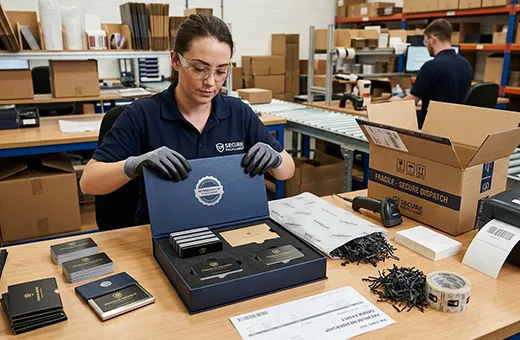
Cards are shipped under tracked transport. Sensitive key material and chip documentation are transmitted through separate secure channels — never in the physical package.
Free quote — no commitment
Tell us about your chip standard, reader ecosystem and personalisation needs — we return a tailored quotation within 24 hours. From 100 cards minimum.
Get your quote in 24h
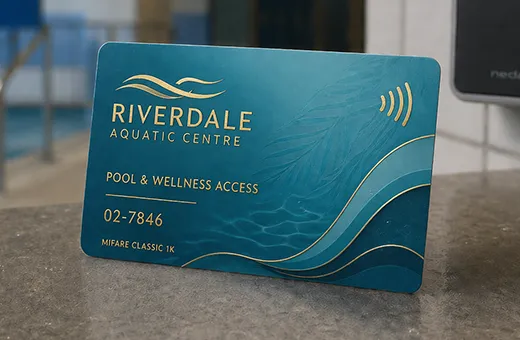
MF S50 (1 KB) or MF S70 (4 KB) — the most broadly deployed 13.56 MHz contactless standard. Memory organised in sectors protected by pairs of keys. Used in access control, transport ticketing and closed-loop loyalty systems.
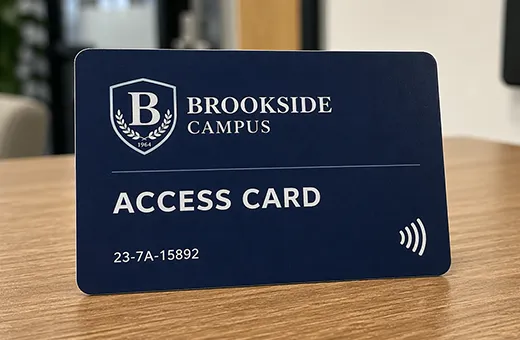
Mifare Classic compatible chips (FM11RF08 / FM11RF32) from Fudan Microelectronics. Same 13.56 MHz protocol and memory layout as NXP Mifare Classic at lower unit cost — useful for large-volume deployments where unit price is critical.
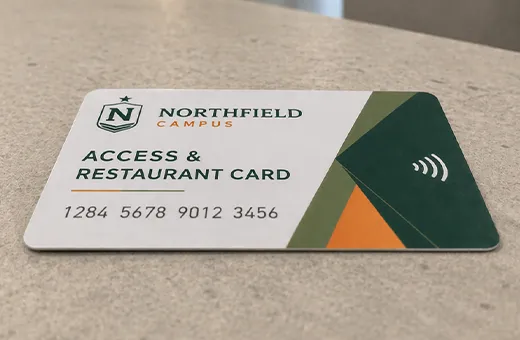
Secure 13.56 MHz chip with 3DES and AES encryption, multi-application support and mutual authentication. Available in 2 KB, 4 KB or 8 KB EEPROM. Reference choice for secure transport, corporate access and regulated identification.
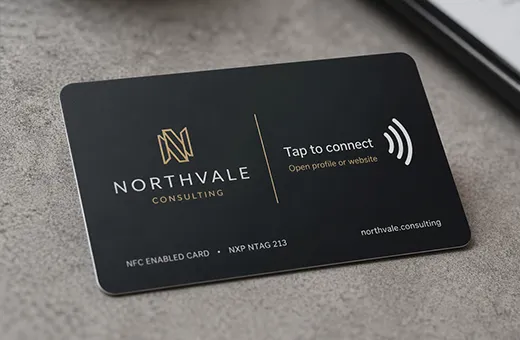
NFC Forum Type 2 chip (180 bytes user memory) readable by every modern smartphone without a dedicated app. Primary choice for tap-to-URL, tap-to-app, digital business cards and NFC marketing campaigns.
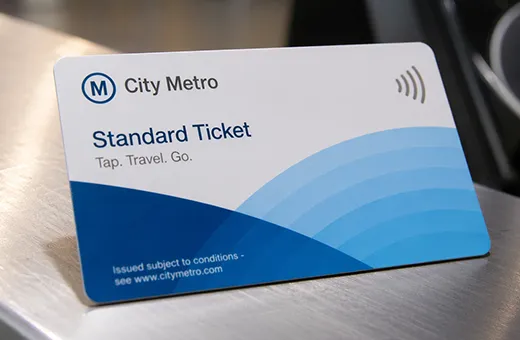
Low-cost 13.56 MHz chip with 48 or 128 bytes of memory. Designed for single-use or short-life applications — event tickets, transport day passes, disposable vouchers — where Mifare Classic would be over-specified.
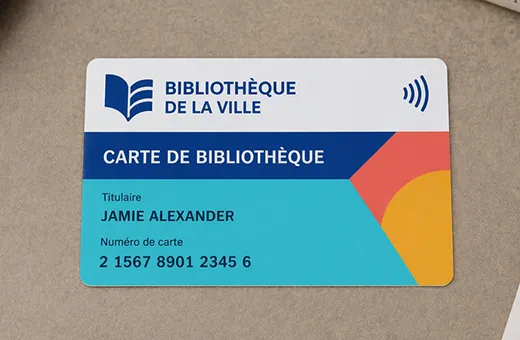
ISO 15693 vicinity chip with longer read range than standard ISO 14443 (up to ~1 m with appropriate readers). Used in libraries, logistics, asset tracking, laundry tracking and applications requiring read-at-distance.
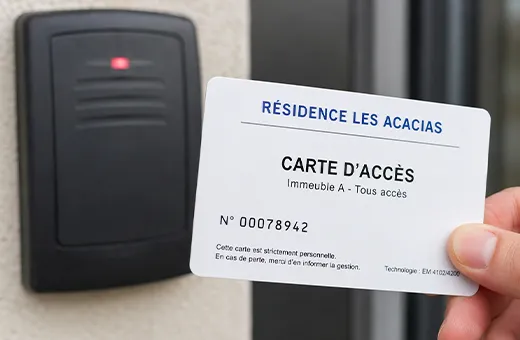
Read-only low-frequency (125 kHz) chips widely deployed in legacy building access systems. Pre-programmed unique ID — ideal for simple presence identification and long-running access infrastructure still in service across Europe.
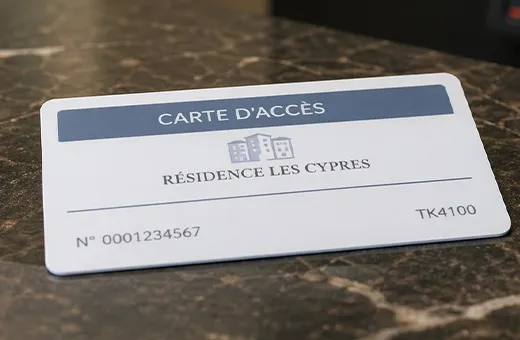
125 kHz read-only chip fully compatible with the EM4100 protocol. Lower-cost alternative to EM Marin with identical reader compatibility — chosen for volume deployments on existing EM-based access infrastructure.
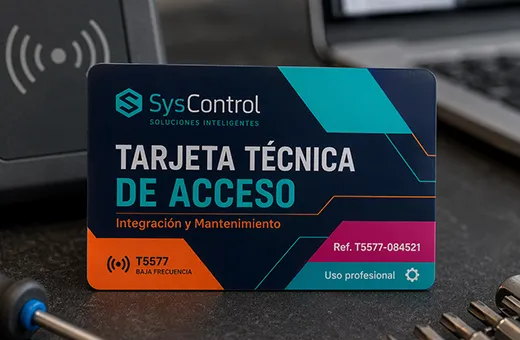
125 kHz programmable chip capable of emulating EM4100, HID Prox and other legacy LF protocols. Rewritable — used for replacement cards on mixed or unknown legacy systems, and for temporary access passes that must be re-encoded between users.
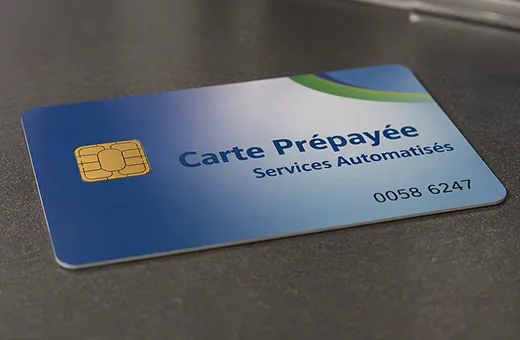
Simple protected-memory chips used for basic authenticated storage — vending machines, public phones, small closed-loop payment systems.
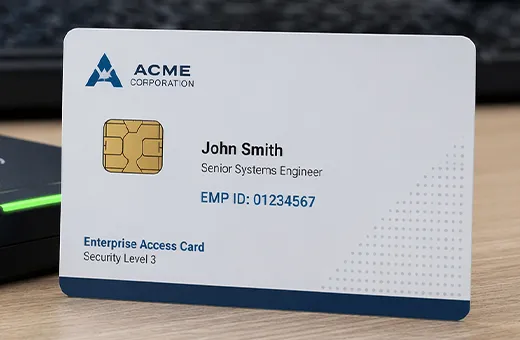
Programmable chip running Java Card applets. Used for secure government ID, corporate authentication and financial applications where custom logic must live on the card itself.
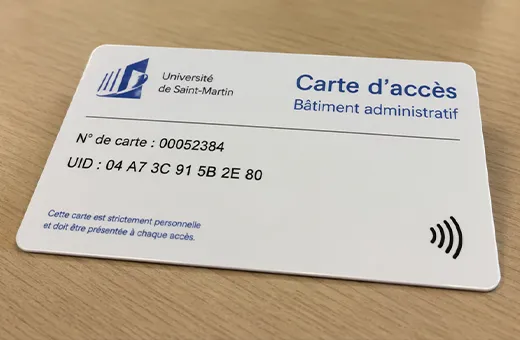
The chip's unique identifier (4 or 7 bytes) printed on the card face in hexadecimal or decimal format — useful for manual identification, audit and pairing with external databases.
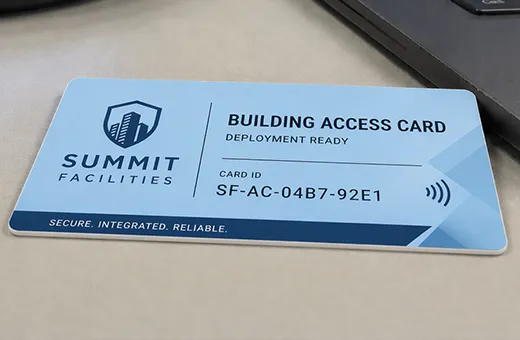
Writing sector keys, access conditions and initial memory content on Mifare family chips. Prepares each card to integrate directly with the target system on first tap.
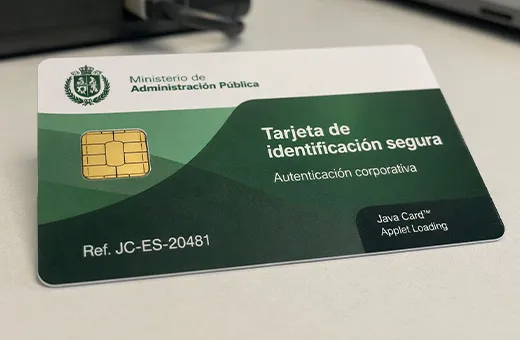
Installing Java Card applets onto programmable chips. Required for e-government, enterprise SSO and card-hosted authentication protocols.
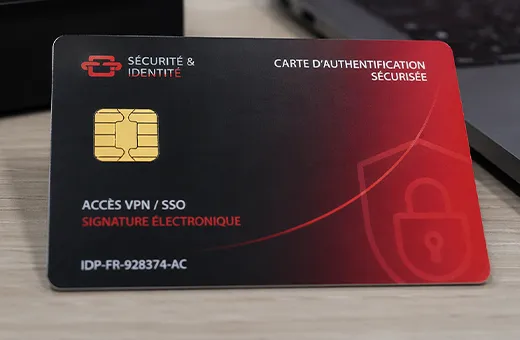
Loading X.509 certificates and key pairs into PKI-capable chips for enterprise identity, SSO, VPN access and qualified electronic signature workflows.
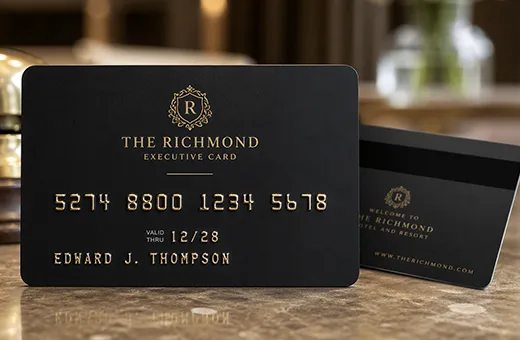
Raised cardholder name, employee number or unique identifier pressed into the PVC alongside the chip — adds a tactile, bank-card style personalisation to corporate, government and access smart cards.
Frequently asked questions
Practical answers for system integrators, security architects and IT procurement teams specifying smart card deployments.
The chip is determined by the reader — not the other way around. Three questions lead to the answer: which reader model or brand is installed, which chip does the current card use (if a legacy card exists), and what security level does the application require. Share the reader model reference and the chip specification of your current cards (from your reader manufacturer or previous card supplier), with an existing working card as reference sample, and we confirm the exact chip family and programming parameters needed. For new deployments, DESFire EV2 or EV3 is the safe modern default when security matters; Mifare Classic 1K remains acceptable for simple closed-loop access.
They represent three generations of the same NXP Mifare family with growing security. Mifare Classic (1994, Crypto-1 algorithm) is widely deployed but considered cryptographically broken — it is not suitable for new secure deployments. Mifare Plus is a drop-in upgrade that adds AES-128 encryption while remaining backward-compatible with Classic infrastructure during migration. Mifare DESFire EV2/EV3 is a fundamentally more secure chip with 3DES/AES, mutual authentication and multi-application support — the correct choice for any secure system deployed today.
Both options are available. We can perform full chip personalisation at production — UID programming, sector key loading, memory initialisation, applet installation and certificate injection — following your exact specification document. Alternatively, cards can be delivered with factory default settings for you to personalise in-house with your own encoder and workflow. The right split depends on your security policy, specifically whether sensitive keys can leave your environment.
Sensitive keys are transmitted through separate secure channels — never in plain text over email or in the physical shipment. Depending on the project scope, we support encrypted key files, HSM-based key ceremonies, derived key schemes from a master key you hold, and secure vendor-to-vendor key exchange protocols. For high-security deployments, we can also sign a bespoke data processing agreement detailing exact handling, storage and destruction procedures.
Yes — this is a dual-interface card and it is the standard configuration for modern e-government ID, banking and secure corporate badges. A single secure element is embedded in the card body and is accessible both through the visible contact pad (ISO 7816 reader) and through the integrated antenna (ISO 14443 contactless reader). The logical chip state is shared across both interfaces, so a certificate loaded via contact is immediately available via contactless.
NTAG chips (NTAG 213, 215, 216) are NFC Forum Type 2 tags designed specifically to be read by standard consumer smartphones over NFC. Their primary use cases are marketing applications (tap-to-URL, tap-to-app, product authenticity), digital business cards, event access tokens and simple tap-to-action workflows. They are not designed for high-security applications. For anything involving authenticated access or financial logic, a Mifare DESFire or contact chip is the right technology instead.
Compatibility is confirmed before production via two methods. If you can share your reader model reference, we verify from the datasheet which chip families and protocols it supports. If you have an existing working card, send it as a reference sample together with its technology signature (chip family, UID length, protocol) from your previous supplier, and we replicate it on the new cards. The specification must come from your side: undocumented or proprietary formats are not decoded. In ambiguous cases, a small pilot batch is produced and tested on your actual reader before the full production run is launched — this eliminates any compatibility risk.
Yes. A smart card can carry a magnetic stripe on the back of the same card body, creating a hybrid technology card that works across both modern chip-based readers and legacy magnetic stripe infrastructure. This configuration is common during phased reader-migration projects where both generations of equipment must be supported in parallel. See our magnetic stripe cards page for technical details on stripe encoding.
Standard production runs 8 to 15 working days from proof approval, depending on the chip standard and the volume of pre-encoding required. Shorter lead times may be possible on stock chip references (Mifare Classic, NTAG, EM4100) without complex personalisation, depending on the production schedule. Delivery covers Europe and the UK with tracked shipping; international dispatch is arranged on request.
Yes. Two design routes alongside print-ready file orders. Template adaptation — share your corporate identity, staff data structure and any access or photo zone requirements, and we adapt a smart card template to your brand, taking into account chip module placement constraints. Full custom design — our in-house designers create the card from scratch with chip module, antenna zone and dual-interface considerations correctly handled. Both routes are quoted alongside the print order in a single quotation.
Who deploys smart cards
Wherever identification must be authenticated, transactions secured or information carried on the card itself — smart cards are the right infrastructure.
Employee access cards for office buildings, data centres and secure zones — combining physical access, IT authentication and presence tracking.
Public transport networks, season tickets and multi-modal transport cards — typically DESFire for secure fare management across urban and regional networks.
National ID cards, health cards, professional qualification cards and public-sector employee credentials — Java Card with loaded applets and PKI certificates.
NTAG-enabled promotional cards, digital business cards, event tokens and product authentication cards — smartphone-readable for consumer-facing use cases.
Custom smart card printing
A smart card combines a printed PVC body with an embedded integrated circuit — contact chip, contactless antenna or both — capable of storing data, running authentication protocols and executing on-card application logic. Lumacards supports every major chip standard produced today: Mifare Classic 1K and 4K for legacy access systems, Mifare Plus and DESFire EV2/EV3 for secure modern deployments, NTAG 213/215/216 for NFC marketing and smartphone-read cards, EM Marin for 125 kHz legacy building access, ICODE SLIX for longer-range vicinity applications, and full ISO 7816 contact chips including Java Card and PKI-capable chips for certificate-based authentication. Dual-interface cards combining a contact chip and contactless antenna are available for e-government, banking and secure corporate identity programmes.
Smart card projects live or die on two factors: chip compatibility with the reader ecosystem and secure personalisation of the chip before deployment. Lumacards confirms compatibility upfront from the reader datasheet and the chip specification you provide, with an existing working card as reference sample, and validates at scale with an encoded pilot batch tested on the actual target reader before full production. Chip personalisation covers UID programming, sector key loading, memory initialisation, Java Card applet installation and PKI certificate injection — all performed under controlled workflows with sensitive key material handled through separate secure channels. For organisations running hybrid reader environments during infrastructure upgrades, smart cards can be produced alongside magnetic stripe cards or in hybrid configurations, and coordinated with membership cards, student cards or badge holders in a single project delivery.
Get a tailored quote within 24 hours — from 100 cards, every chip standard supported, reader-tested before dispatch.