
Full range covered
Every finish, encoding standard, material and format used across our PVC, paper, smart card, packaging and accessory ranges — documented in one reference page for B2B specifiers.
Every visual, tactile and technical option for B2B card programmes
Complete reference of finishes, encoding standards, materials and formats used across our PVC cards, paper cards, smart cards, magnetic stripe, gift card packaging and badge holder ranges. Designed for B2B specifiers who need to confirm capabilities before requesting a quote.
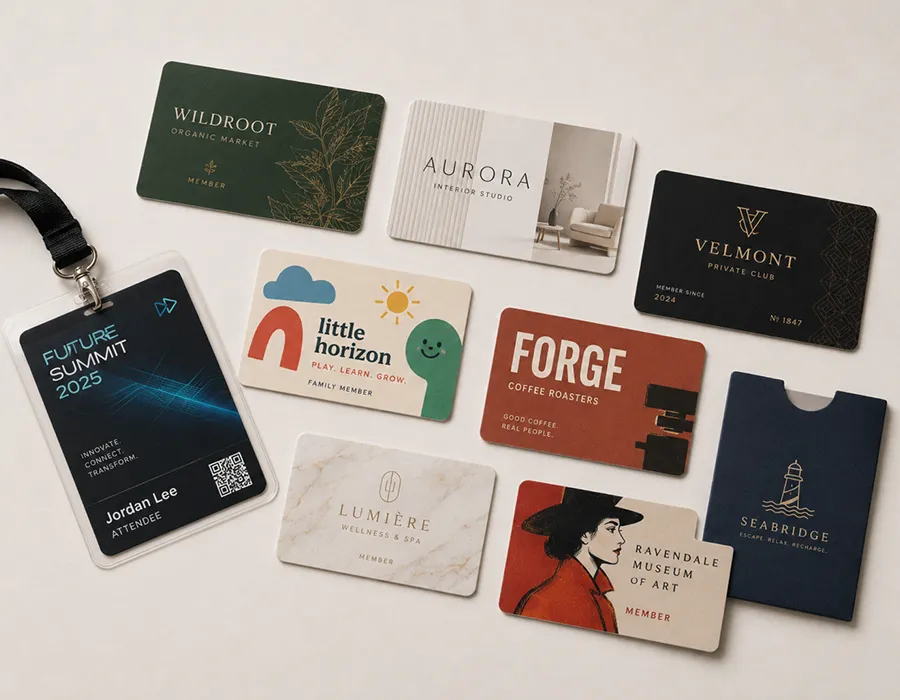
Why this reference matters
Every finish, encoding standard, material and format used across our PVC, paper, smart card, packaging and accessory ranges — documented in one reference page for B2B specifiers.
Finishes are layered in the right order — lamination first, then foil, then spot UV — to preserve registration and avoid finish conflicts. Combinations are validated on the chosen stock before production.
Every option listed here is in current production at Lumacards. No "available on request" smoke screen — if it is on this page, it ships from European production within standard lead times.
Talk specs with a real specialist
Tell us your project — finish ambition, stock preference, encoding requirement, deadline. A production specialist returns a tailored quotation within 24 hours, with recommendations on the right combination for your brand.
Get your quote in 24h
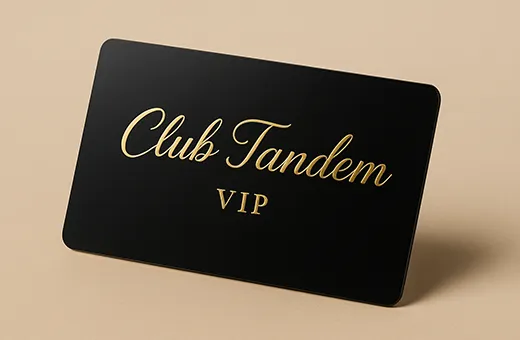
Gold, silver, copper, rose-gold or coloured metallic foil applied with heat and pressure. The most consistently effective finish to lift perceived value — particularly impactful on dark or matte laminated backgrounds. Works on PVC and paper.

Glossy varnish applied only to specific design elements over a matte background. Creates refined visual contrast on logos, names or key motifs without the metallic statement of foil. Works on PVC and paper.
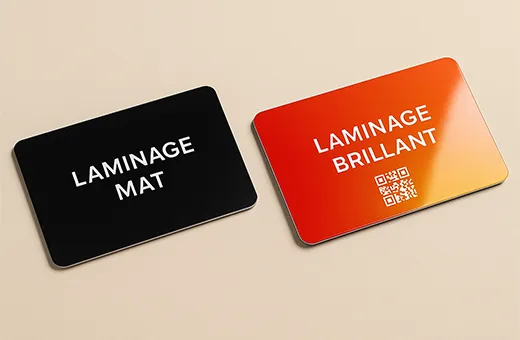
Protective film over the printed surface — gloss intensifies colour saturation, matte delivers a quieter refined finish. Both extend card lifespan against wallet wear. The default finish on most PVC and paper card products.
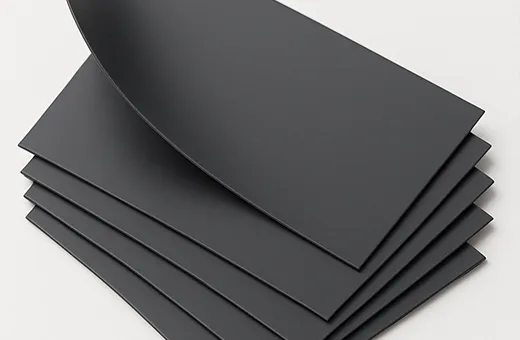
Velvety matte film over the printed surface — fingerprint-resistant and signature of premium consultancy, beauty and hospitality brands. The tactile cue that says "considered" before the recipient sees the design. Works on PVC and paper.

Raised (emboss) or recessed (deboss) relief on logo, monogram or graphic elements. A tactile finish exclusive to paper stocks — particularly impactful on uncoated, recycled, cotton and triplex papers above 350 gsm.
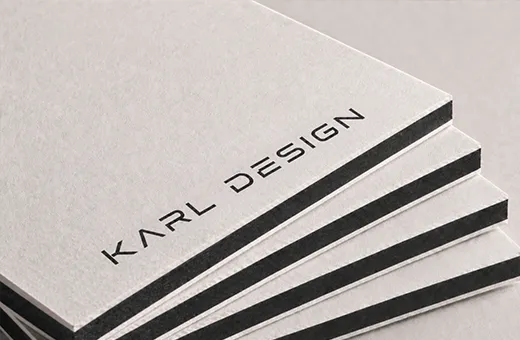
Coloured ink applied to the cut edge of triplex or thick paper stocks (600+ gsm). Available in any brand colour or metallic gold. Visible only when the card is held edge-on or stacked — a discreet but immediately recognised premium signal exclusive to paper.
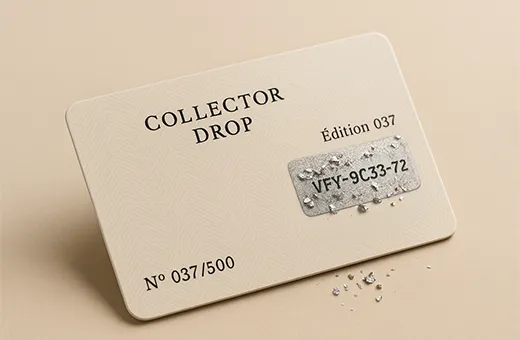
Opaque silver or gold ink layer hiding an activation code, PIN or promotional reveal — the customer scratches to access the data. Standard anti-fraud configuration for gift cards displayed on retail racks. Works on PVC and paper.
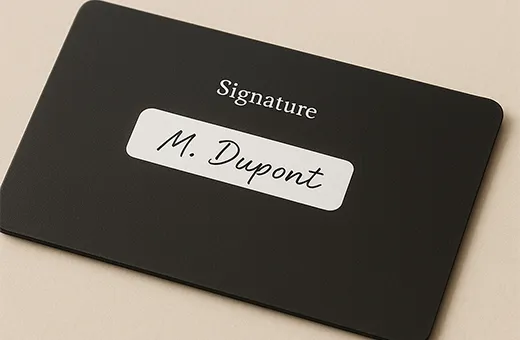
White writable area on the back of the card for signature, name, validity date or other manually-entered information. Compatible with standard ballpoint and gel pens. Common on membership, student and visitor cards (PVC).

Pantone spot colour added on top of standard CMYK printing to reproduce a specific brand reference exactly. Useful when a corporate colour must be identical on every production run and CMYK conversion alone is not precise enough. Works on PVC and paper.
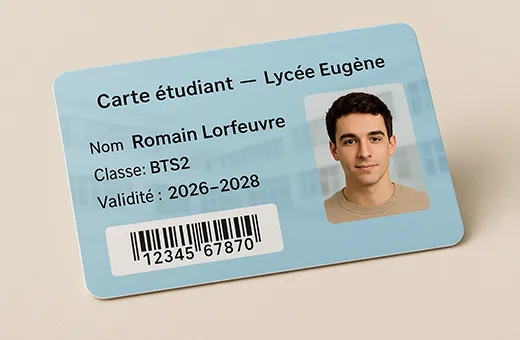
Member photo, full name, ID number, validity dates, tier labels — printed individually from your CSV or Excel file during the run. Each card unique. Photo printing requires JPEG/PNG at 300 dpi minimum.
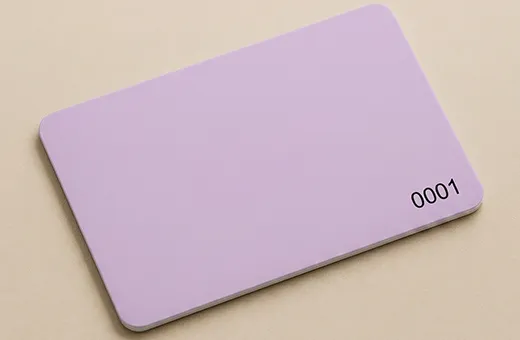
Unique sequential or structured numbering per card for internal tracking, member management, gift card activation and operational programmes. Numbering can be visible on the surface or hidden under a scratch-off layer.
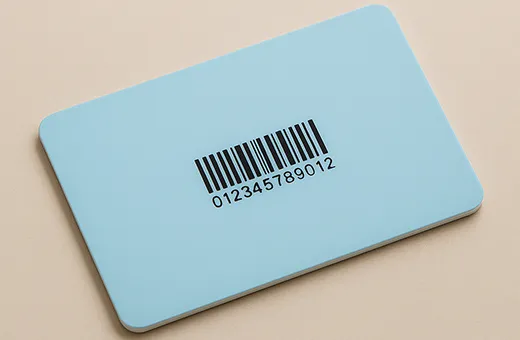
Standard 1D barcode printed at scan-grade resolution. Read by every retail laser scanner without configuration. EAN-13 for retail integration with commercial product codes; Code 128 for variable-length custom member IDs.
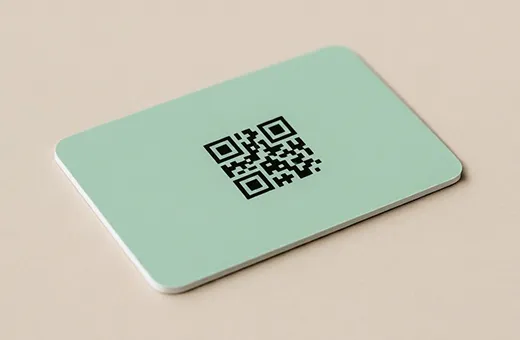
Unique QR code per card, readable by every smartphone camera and 2D scanner. Links to digital wallets, member portals, vCard downloads, activation pages or hybrid POS-plus-online platforms.
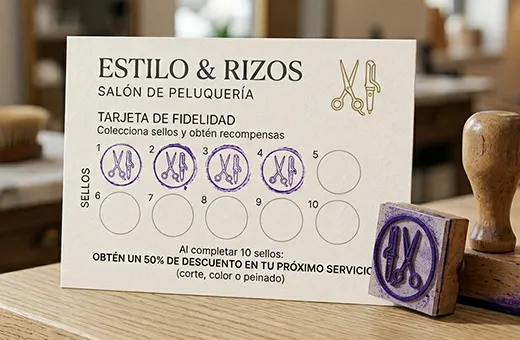
Pre-printed grids of 5, 8, 10 or 12 stamp cells with a clearly identified reward zone — for proximity retail loyalty programmes (coffee shops, bakeries, restaurants, hairdressers). Custom stamp shapes available.
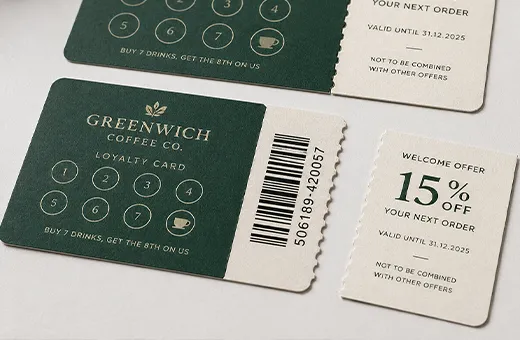
Perforated line on the card that the customer detaches to redeem a promotional offer or separate a personal message from the redeemable section. Common on paper loyalty welcome cards and gift voucher kits.
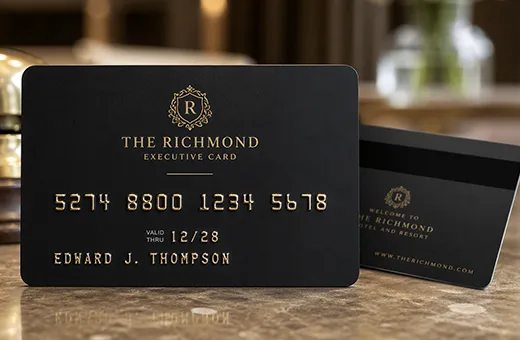
Raised cardholder name, member number or unique reference pressed into the PVC — a tactile, bank-card style personalisation. Variable data card by card (one card, one unique raised number) for premium membership, executive ID cards and access programmes.
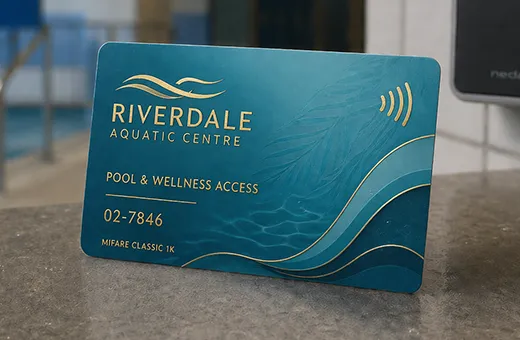
Full NXP Mifare family (Classic 1K/4K, Plus, DESFire EV1/EV2/EV3 2K/4K/8K), NTAG 213/215/216 NFC, EM Marin 4102/4200, ICODE SLIX, T5577, Fudan compatible. ISO 14443 (13.56 MHz HF) and ISO 15693 vicinity standards. 125 kHz LF chips for legacy access infrastructure.
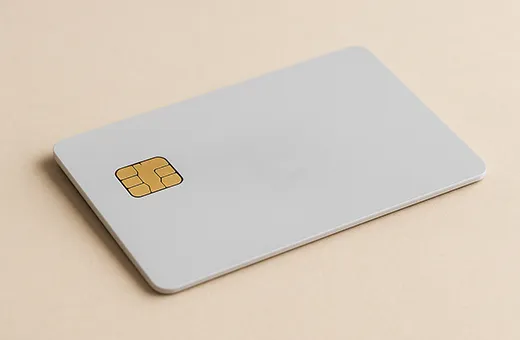
Visible chip module inserted into a card reader for secure authentication, banking, e-government and PKI applications. SLE4442 for simple memory cards, Java Card with applet loading and PKI certificate injection on request.
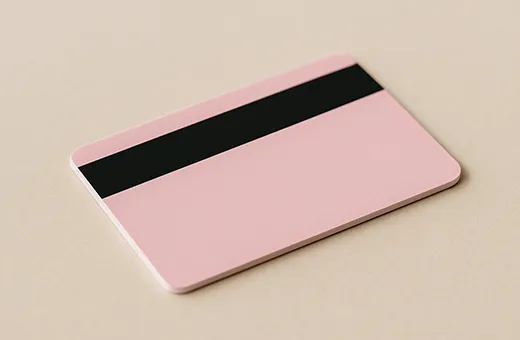
ISO 7811 tracks 1, 2 and 3. Hi-Co 2750 Oe and 4000 Oe for permanent encoding on hotel keys, transport and access cards. Lo-Co 300 Oe for rewritable applications. Variable data encoded card-by-card and read-verified before dispatch.
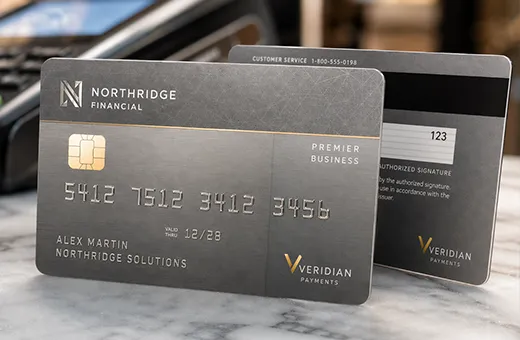
Single card combining contact chip (ISO 7816) and contactless antenna (ISO 14443) — the standard for e-government, secure corporate badges and modern banking. Hybrid configurations with magnetic stripe also possible for phased reader-migration projects.
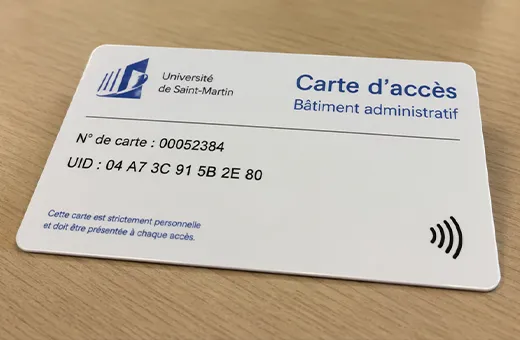
UID programming, sector key configuration, memory initialisation, Java Card applet loading and PKI certificate injection — performed under controlled workflow with secure key exchange protocols. Fully ready-to-deploy cards on dispatch.
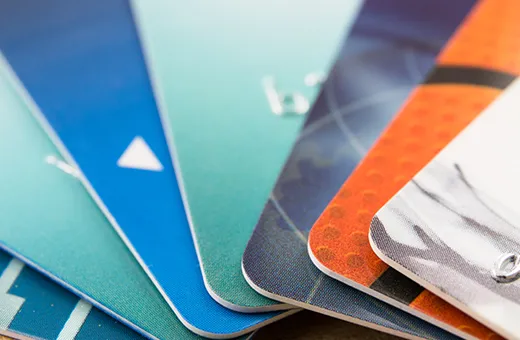
ISO 7810 ID-1 reference specification (85.6 × 54 mm, 0.76 mm thick). The right base for loyalty, gift, membership, student, business and identification cards. Recyclable thermoplastic — long lifespan, wallet-compatible.
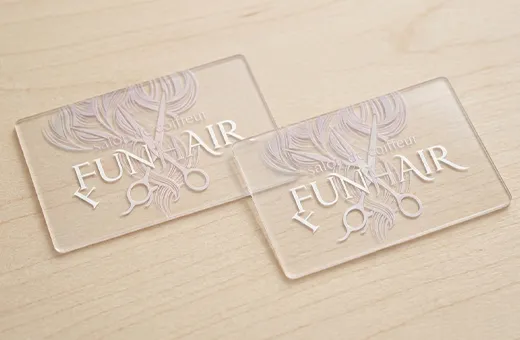
Fully clear PVC stock for architects, creative studios, modern consumer brands and luxury positioning. A printed element appears to float in the hand. Requires opaque white underlay for fully readable text.

Semi-transparent stock with a softer, slightly milky finish. Combines the signature of clear PVC with better legibility of printed text. Popular with coworking spaces, private clubs and design-led memberships.

Thin, supple plastic card that bends with a distinctive snap. Memorable at the handover moment — a strong pick for executive business cards, networking events and creative industries.
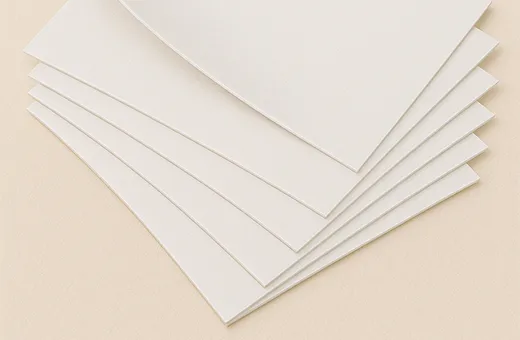
Smooth coated stock with sharp colour rendering — the reference for paper loyalty, gift and business cards. 350 gsm is the workhorse; 400 gsm delivers a more substantial premium feel for high-end positioning.
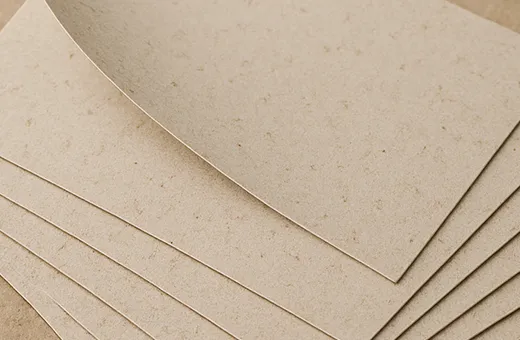
Matte uncoated natural stock for design-led brands, FSC-certified recycled paper for eco-conscious positioning. Pair with vegetable inks (soy or linseed-based) for a credible sustainability claim. Stamp-friendly for paper loyalty cards.
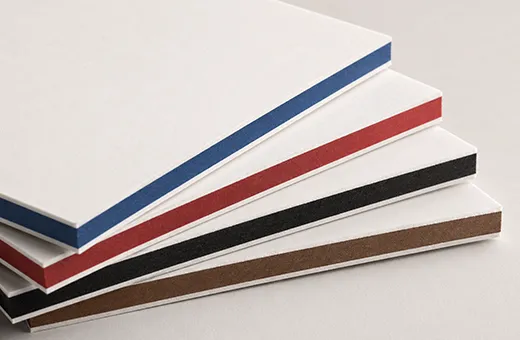
Three layers of paper bonded together (typically 600 to 800 gsm total). Allows edge painting in a coloured central layer and creates the substantial, almost rigid feel associated with high-end studio cards.
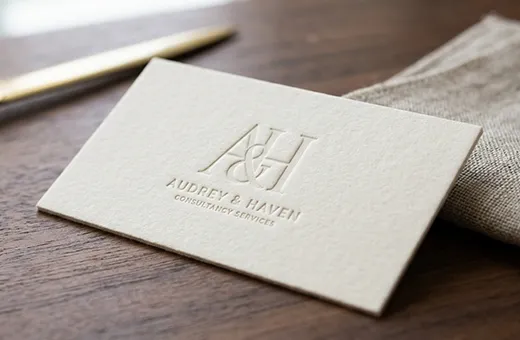
Cotton fibre paper with distinctly soft, slightly thicker tactile feel — the natural pairing for embossing and blind impression. Specialty papers (linen, felt, kraft, metallic, tracing) available for limited editions and design-led signatures.
The credit card standard. Fits wallet card slots, standard cardholders, badge holders and packaging die-cuts. The default for PVC cards (loyalty, gift, membership, student, business, smart, magnetic stripe).
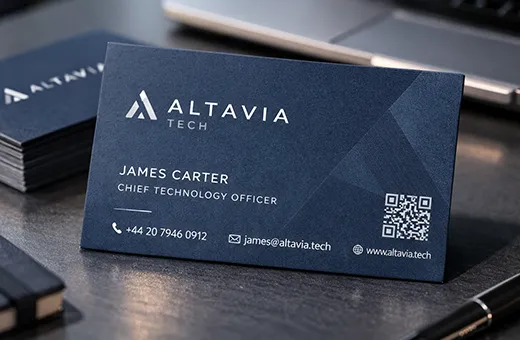
Reference paper business card format on the European market. Slightly different from ISO 7810 (1 mm taller) — fits wallet card slots and standard cardholders. The default for paper business cards.
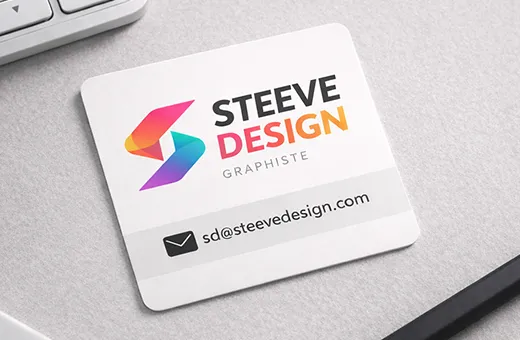
Compact square card for design studios, photographers and creative professionals seeking a format that immediately stands out. Compatible with most cardholders, slightly less wallet-friendly than the standard format.

Larger formats for direct mailings, hospitality vouchers, spa experiences and corporate gifting where the voucher carries longer descriptive text alongside the value (terms, validity, redemption instructions).

Die-cut radius on the four corners — softens the silhouette and reduces corner wear during wallet use, where unprotected corners are the first failure point on paper cards. Available on PVC and paper.
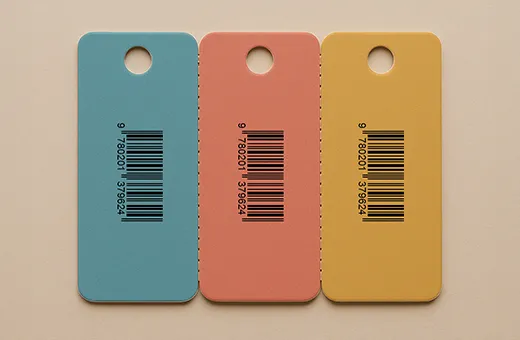
Cards die-cut to brand-specific shapes — mini cards, key tags, half-cards, hang-hole cards for retail peg displays, or fully custom silhouettes. Tooling cost factored into the quote on first run, amortised on re-orders.
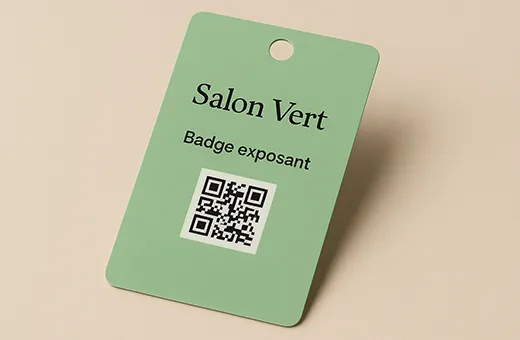
Physical hole punched into the card for attachment to a lanyard, badge holder, retractable reel or key ring. Round (typically 4 mm) for lanyard hooks and key rings; oblong (typically 14 × 3 mm) for flat clip attachments. Position and size confirmed on the proof against the intended accessory.
Tell us your project and a specialist returns finish recommendations alongside the quote within 24 hours — no commitment, no automated reply.
Combining finishes
Finish order matters — applied in the wrong sequence, foil chips off lamination, spot UV blooms onto adjacent areas, embossing crushes a laminated layer. The right sequence is documented and validated before every run.

CMYK printing on the chosen stock — coated for vibrant colour, uncoated for tactile premium, transparent for signature plastic positioning. Pantone spot colour added on top of CMYK if required.

Gloss or matte lamination applied first as a protective base layer (soft-touch lamination is a paper-only option). Stamp-friendly cards skip lamination on the front to preserve ink absorption. Triplex bonding happens at this stage on multi-layer paper.
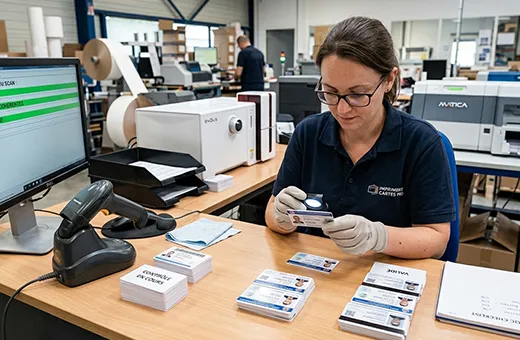
Hot foil stamping applied with heat and pressure on the laminated surface — gold, silver, copper, rose-gold or coloured foils. Spot UV varnish applied separately, layered on selective design elements over a matte background.
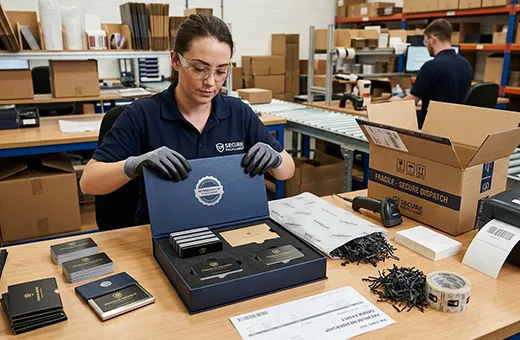
Embossing or debossing applied last (paper only), then edge painting on triplex if specified. Final die-cut, rounded corners and any custom shapes performed at the end. Quality-controlled card by card before packing.
Frequently asked questions
Practical answers on finish compatibility, combinations, lead time impact, encoding choice and stock recommendations.
Hot foil stamping consistently delivers the strongest visual impact — particularly when applied on a dark or matte laminated background. Edge painting on triplex paper comes second for paper-only projects, with the discreet but immediately recognised premium signal. For PVC, the combination of frosted or transparent stock with foil stamping creates the most distinctive luxury card on the market. Spot UV is a quieter alternative that signals refinement without metallic statement.
Available on both: hot foil stamping, spot UV varnish, gloss/matte lamination, scratch-off ink, Pantone colour matching, rounded corners. Paper only: soft-touch lamination, embossing and debossing (relief requires paper fibres), edge painting (requires triplex multi-layer stock above 600 gsm), stamp zones for loyalty programmes. PVC only: writable signature panel, opaque white underlay (for transparent stocks), magnetic stripe encoding, contact and contactless chip embedding.
Yes — and most premium cards do. The key is the correct application order: lamination first (protective base), then foil stamping, then spot UV, then embossing or edge painting last. Each finish is provided as a separate layer in the artwork file (foil zones and spot UV areas as 100 % black on dedicated layers). Combinations are validated on the proof and corrected if a finish risks chipping or registering poorly on another. There is no hard limit on combinations — only the budget and the visual coherence of the design.
Yes, slightly. Standard production runs 4 to 6 working days for paper, 6 to 10 for PVC. Adding premium finishes (foil, embossing, edge painting, scratch-off) on paper extends the cycle to 8 to 10 working days. Embossing has minimal additional impact when applied without ink. Shorter lead times may be possible on standard configurations without complex finishing, depending on the production schedule — mention your deadline upfront and we confirm feasibility.
Depends on your reader infrastructure. Modern secure access: Mifare DESFire EV2 or EV3 (3DES/AES encryption, mutual authentication). Established mid-security: Mifare Classic 1K/4K (most widely deployed but cryptographically dated). Legacy 125 kHz infrastructure: EM Marin 4102/4200 or TK4100 (read-only IDs). Smartphone tap interactions: NTAG 213/215/216 (NFC Forum Type 2). For new deployments where security matters, DESFire EV3 is the modern default. For pure card replacement on existing readers, share your reader model or an existing working card and we replicate the exact technology.
Coercivity (in Oersted, Oe) determines how easily the magnetic data can be erased or rewritten. Hi-Co (2750 or 4000 Oe) is permanent encoding resistant to accidental demagnetisation by phones, magnetic clasps and bag covers — used for hotel keys, transport cards, banking and access cards. Lo-Co (300 Oe) is rewritable, used where the same card is re-encoded between users (gym day passes, library cards, short-cycle hotel rooms). The right choice depends on whether the data on the card is permanent or session-based.
Standard PVC 0.76 mm gives the best photo rendering with edge-to-edge full-colour printing — the reference for membership, student and ID cards. Paper alternatives work too: coated 350 or 400 gsm delivers sharp colour, uncoated natural softens the image with a more artisan feel. For very high photo quality requirements (passport-grade ID cards), PVC is the recommended choice. Photo files should be supplied as JPEG or PNG at 300 dpi minimum (around 400 × 500 px at printed size for a standard photo zone).
Yes — this is a hybrid technology card. Magnetic stripe on the back, contact chip or contactless antenna on the front, on a single card body. Common during phased reader-migration projects where both legacy and modern infrastructure must be supported in parallel. Dual interface cards (contact chip + contactless antenna sharing one secure element) are also available — the standard for e-government, banking and modern corporate badges.
Each finish requires its own dedicated layer in the working file. Foil zones, spot UV areas and embossing positions must be provided as separate 100 % black layers sitting over the CMYK base — so the finishing plates can be isolated cleanly at production. A 300 dpi print-ready PDF or AI file with 3 mm bleed covers the baseline. We share template files on request, or our in-house designers can prepare the artwork from a brief — quoted alongside the print order.
Get a tailored quote with finish recommendations within 24 hours, or send us a message for technical advice. No commitment either way.